Painting company reviews are won or lost on the punch list and the warranty callback, not on the finish coat. Paint is the one trade whose work hangs at eye level in the room where the customer eats dinner, relit every hour by a different window. Your crew drives off. The wall keeps talking. Whatever it says over the next three weeks is what gets typed into Google.
I've watched painting owners argue about sprayer tips and product lines for an hour, then lose a five star review over two nail pops and a drop cloth left in the driveway. Same crew, same paint, same price. The last ninety minutes went differently. That's the whole gap.
The wall keeps talking after the truck pulls away
Here's what makes this trade strange. A water heater either leaks or it doesn't. Paint gets re-graded every single morning, in raking light nobody saw on the day you rolled it.
Sherwin-Williams says it plainly in their own touch-up guide: flat and matte forgive a spot repair, satin and semi-gloss flash, and sometimes the honest fix is recoating the whole wall. So a customer who spots a holiday on day six isn't being picky. They're seeing what 4pm does to a wall you sighted at noon.
When I read painting company reviews that landed under four stars, the complaint is almost never the color. It's something the customer found later, in light the crew never worked in. Your review clock doesn't start when you finish. It starts when they start looking.
Painting company reviews get decided on the punch list
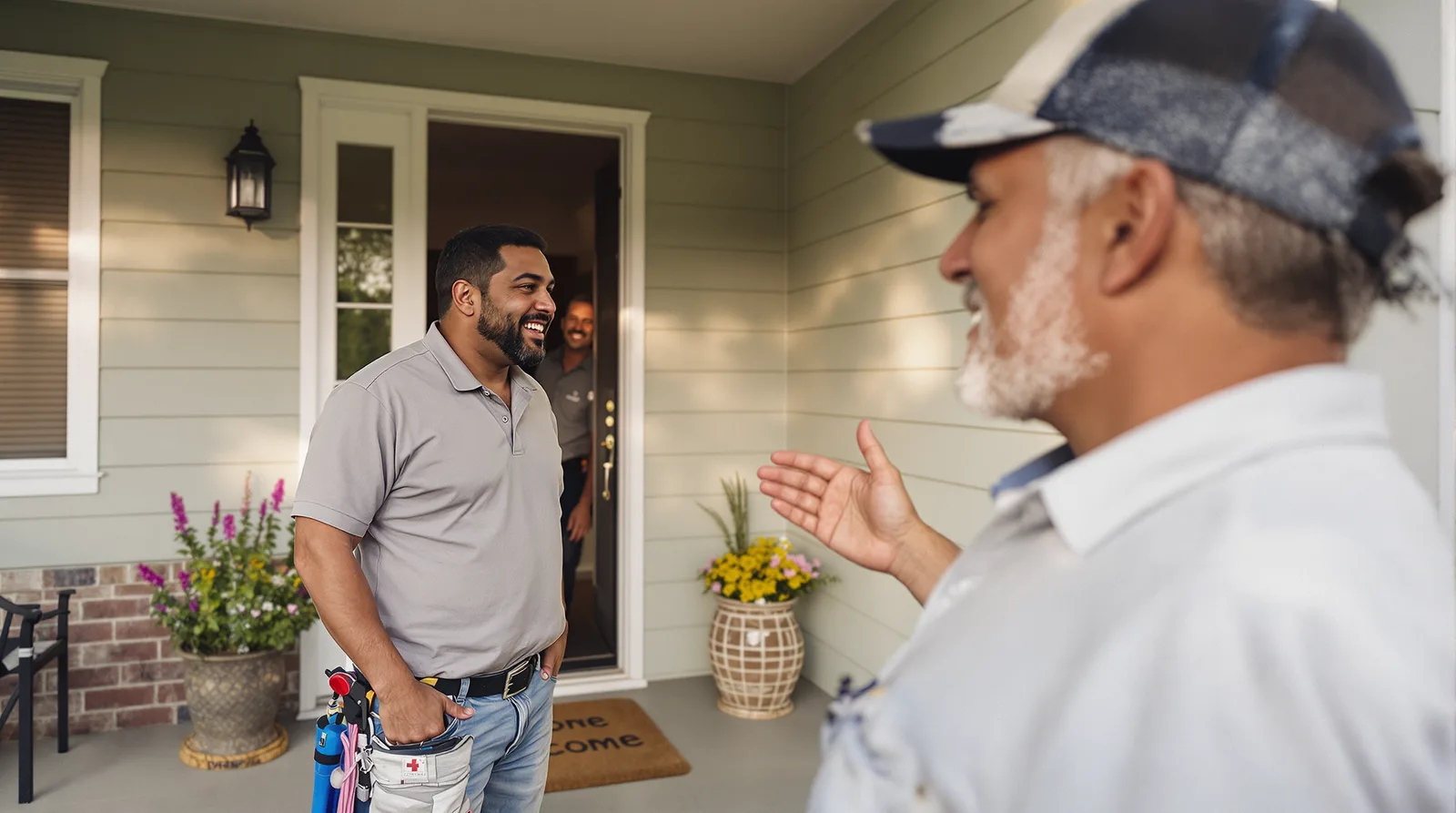
The final walkthrough is the review. Not the estimate walkthrough, which is a different animal entirely and wins you the job in the first place. I broke that one down in the piece on raising your estimate close rate. This is the other walk, the one most painters treat as a handshake in a doorway with the truck already running.
Run it like an inspection you're leading instead of one you're surviving.
- Hand them the tape. A roll of blue tape and one sentence: "tag anything you'd change." A homeowner holding tape is a collaborator. A homeowner holding a phone is a reviewer.
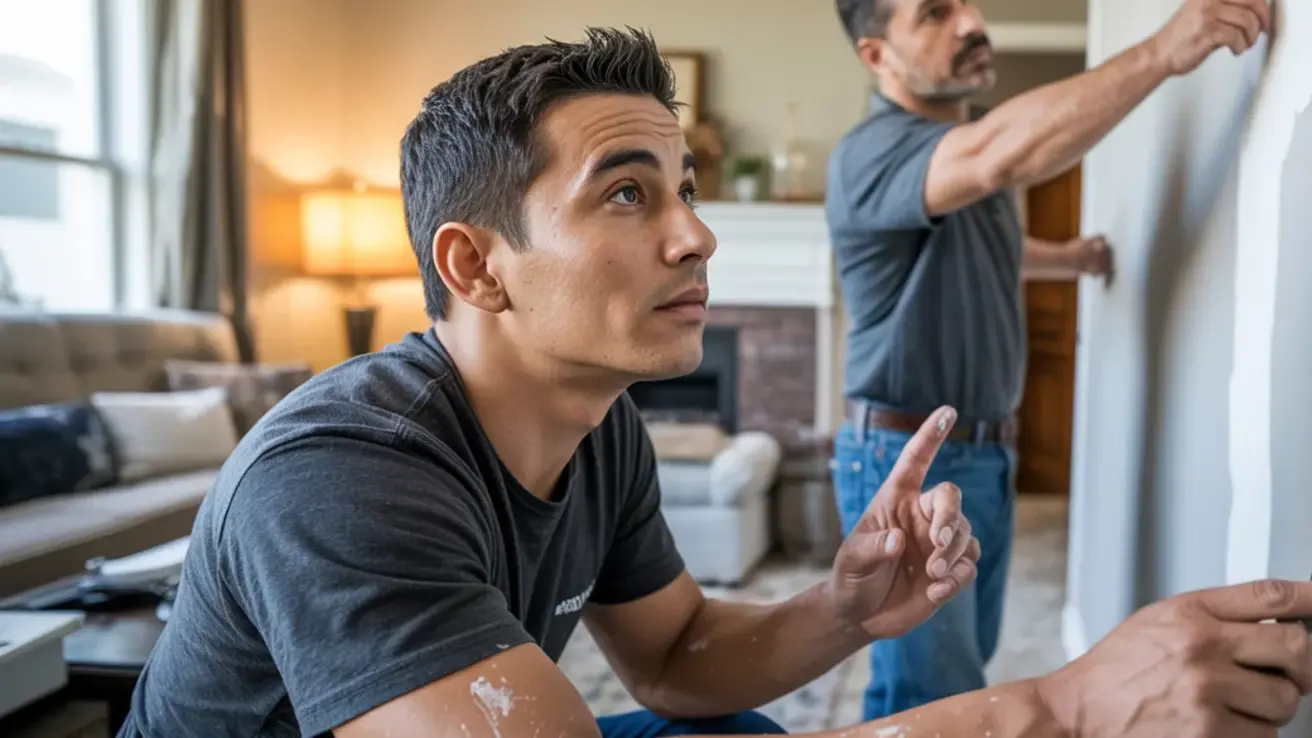
- Walk it in the bad light. Blinds open, a work light held at an angle, room by room. Find the flaws out loud before they do.
- Write the list down in front of them. Paper, phone, doesn't matter. A tagged flaw nobody wrote down is a flaw they'll assume you ignored.
- Put a clock on it. "Two hours Thursday morning." Vague reads as never.
- Close it out loud. Walk it again once the touch-ups are dry and get an actual "yep, that's it" from a human being.
That last step is the one everybody skips, and it's the one that sets the star count.
Ask after the touch-ups are dry, not when the crew packs up
Standard review advice says ask at peak happiness, the moment the job's done. For most trades that's exactly right, and the full cadence is in my playbook on building a review system. Painting is the exception, and the reason is physical. On pack-up day your customer hasn't actually lived with the walls yet.
Ask too early and you're asking them to rate an inspection they haven't run. Best case, you get something generic. Worst case, they post five stars Tuesday, find a run on the stairwell Friday, and edit it down to three, which Google then shows with today's date sitting on top of your profile.
My rule for painters: the request fires after the punch list is signed off and the touch-ups are dry. Usually 24 to 72 hours after the last coat. Late enough that they've seen the walls in three kinds of light. Early enough that they still remember your foreman's name.
The posted score drifts down
They rate the relief of being done, then keep finding things. Every edit lands with a fresh date on your profile, and edits are almost never upward.
The posted score holds
They've already hunted for flaws and watched you fix them. The review gets written once, about a finished job, and it stays put.
The callback eleven months later is a second review
Every painter gets this call. A patch telegraphs through a bedroom wall, a caulk joint splits, a spot over an old water stain bleeds back. Month eleven, job long paid, phone rings.
Most owners hear a loss. I hear the cheapest review in the trade. Nobody expects a painter to come back, so the bar is lying on the floor, and stepping over it costs one morning and half a quart.
- Label and keep the leftovers. Color, sheen, batch, room, date, written on the can and logged in the customer file. Touching up from the original paint is the manufacturer's own advice, and a year later that can decides whether this is a one hour visit or a whole wall.
- Answer inside 48 hours. Not to fix it, just to schedule it. Silence is what turns a nickel-sized failure into a one star.
- Send the same painter if you can. In my experience a returning face says the company remembers the house. A stranger with a brush says you sold the file.
- Then ask. Someone you drove back out for writes a completely different review than someone you merely painted for.
This matters double on repeat contracts. Property managers and HOA boards keep a memory that outlasts any individual homeowner, which is most of what I was getting at in the piece on getting on the HOA list. One handled callback in year one buys you the walkthrough in year three.
What the painting company reviews that book work actually say
"Great job, looks amazing, highly recommend!" Thanks. Sells nothing. The next homeowner reading that learned exactly zero about whether you'll ruin their carpet.
The reviews that book work name the three things a nervous homeowner is actually scared of.
- Prep. Every failure a homeowner will ever blame you for starts here. Fine Homebuilding boils the standard down to clean, dry, dull and sound. A review that says "they washed and sanded before anybody opened a can" is worth more than any photo you'll ever post.
- Cleanliness. Nobody outside this trade knows what a good coat looks like. Everybody knows what their own floors looked like at 6pm. Masking, daily cleanup, where the ladders slept.
- The schedule. Homeowners tell horror stories about painters vanishing for four days, not about sheen. "Started Monday, finished Thursday, exactly like they said" is the single most persuasive sentence on your profile.
You can't script a customer and you shouldn't try. But you can ask a question instead of issuing a demand: "if you write one, would you mention how the prep went and whether we finished when we said we would?" That's a prompt, not a bribe, and no platform rule has a problem with it.
One note on the score itself. Northwestern's Spiegel Research Center found that purchase likelihood peaks in the 4.0 to 4.7 star range and falls as it approaches 5.0, because shoppers read a spotless record as staged. Harvard Business School's Michael Luca found that a one star difference moved revenue roughly 5 to 9 percent for independent businesses. Translation: a detailed four star that walks through your prep beats a flawless page of "awesome!" that reads like your cousin wrote it.
What I'd change this week
Pick one. Add a signed punch list to every job close. Or move the review request to 48 hours after touch-ups instead of pack-up day. Or start labeling and logging leftover cans with the batch and the room, so the callback in month eleven takes an hour instead of a weekend.
Then track the one number I'd actually watch: what share of finished jobs produced a posted review. If you're under half, the work isn't your problem. The last ninety minutes of it are.
The 60-second version: paint gets re-inspected every morning for years, so the punch list is the review moment, not the finish coat. Walk it in bad light, hand them blue tape, close it out loud. Send the request after touch-ups are dry. Log the batch, answer the month eleven callback in 48 hours, and ask for prep, cleanliness and schedule by name.
None of this replaces demand. You still need homeowners calling in the first place, which is the whole point of the painting side of what we build: your rankings, your reviews, your booked estimates, in your territory alone. Reviews just make every one of those dollars work harder, since a stack of specific ones lowers what the next booked job costs you.
If you want the mechanics, here's how the build actually runs, and the trade-specific version lives on the painting page. Our team can walk through it with you in 15 minutes. Either way, go fix your walkthrough first, because those walls are going to keep talking for the next ten years whether or not anybody's writing down what they say.
Stop renting your growth. Own it.
We build the whole engine and run it for you, with nothing held hostage. One company per trade, per market.
Book a Discovery Call →