Painting business marketing has one real job: fill the calendar with buyers who already accept that they're paying for prep, not just paint. More leads won't rescue a painting business that keeps losing bids to guys who forgot to count the sanding. Better informed leads will. That's the whole game.
I've watched hundreds of home service owners lose money on jobs they technically won. With painters it's almost always the same leak, and it has a name. The invisible hours.
The hours your customer never sees
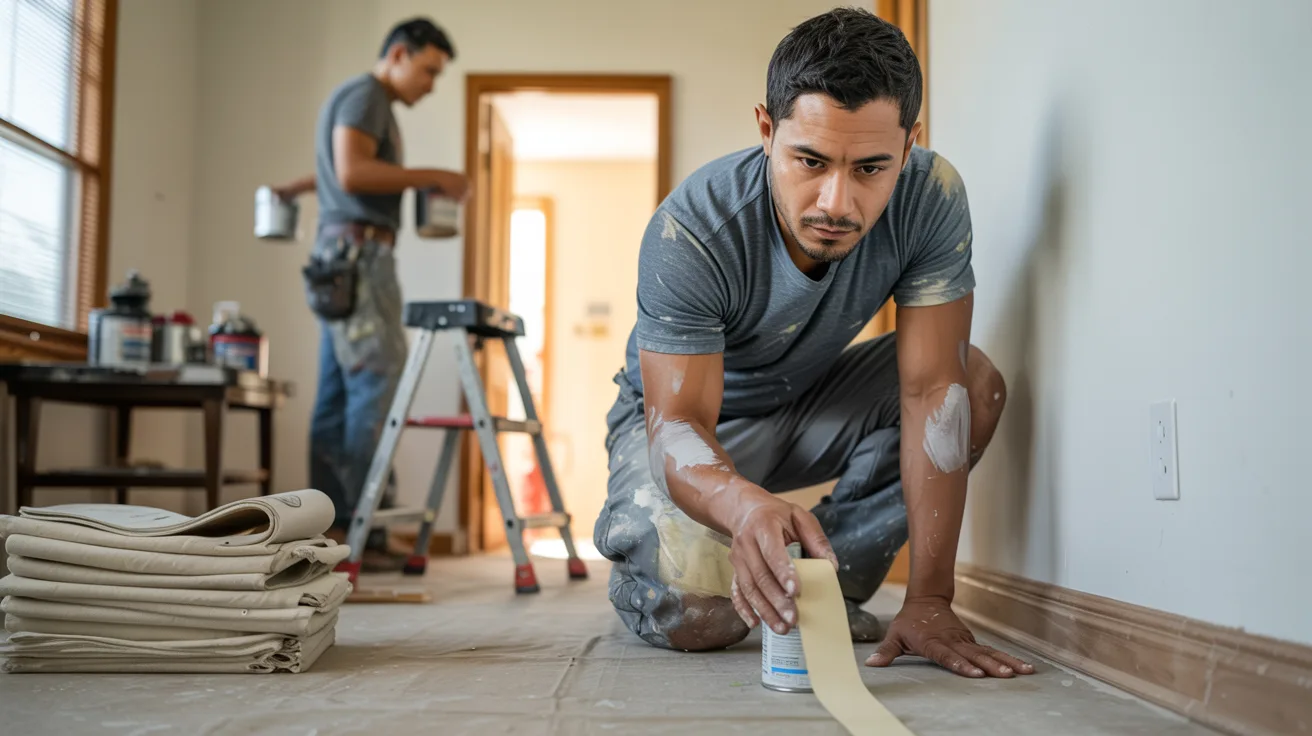
Masking. Moving the sectional. Scraping. Caulking. Filling nail holes. Sanding down the ridge somebody left in the drywall mud back in 2009. Then plastic, paper, tape, and an hour of cleanup nobody thanks you for. None of it photographs well. All of it hits your payroll.
It isn't a small slice of the work, either. The Labor Department's occupational profile for painters lists 19 core tasks. Seven of them happen before a drop of finish paint touches the wall: covering surfaces, filling cracks, smoothing with sandpaper, washing and treating, priming, stripping old finishes, pulling switch plates.
Then there's the legal prep. If the house went up before 1978 and you'll disturb more than six square feet inside or twenty outside, the EPA's Renovation, Repair and Painting rule applies. Certified renovator on site, containment, a specific cleanup. Real hours, real cost. No homeowner has ever asked for them by name.
Why the careful painter looks expensive
Two painters walk the same 2,400 square foot exterior. One writes down the eighteen hours of scraping, caulking, and spot priming that siding actually needs. The other writes down "paint house." The second number is lower. He isn't cheating anybody on purpose. He just didn't look up.
The homeowner gets two PDFs. Both say "exterior repaint." One costs $1,900 less. Guess who gets the call back.
You didn't lose that job at the bid. You lost it weeks earlier, when nothing that homeowner read had taught them what prep even is. By the time they're comparing numbers, the only thing left to compare is numbers.
What painting business marketing actually has to do
So the assignment isn't "get more calls." It's narrower, and a lot more useful. Painting business marketing that works does three things before you ever hand over a number.
- Pre-sell the prep. By the time a homeowner opens your estimate, they should expect a prep line. They should also be a little suspicious of the bid that doesn't have one.
- Bring you your own buyers. Not a form a marketplace sold to five painters at once, all of whom will compete on the exact thing you refuse to cut.
- Make the proof easy to find. Taped-off rooms, patched siding, reviews that mention the cleanup. Boring photos. They close jobs.
Notice none of that is about being louder. It's about arriving in a homeowner's head before the low bid does, carrying an idea the low bid can't survive.
Make the prep visible before the price lands
Every painting business I've watched fix its close rate did some version of the same handful of things. None are clever. All of them work.
- Photograph the prep, not just the reveal. Everybody posts the finished nursery. Post the masked one. Post the caulk bead. Post the four bags of sanding dust you hauled out.
- Line-item the hours. "Prep included" tells a homeowner nothing. "Surface prep: 18 hours, scrape and feather-sand loose paint, caulk 140 linear feet, spot prime bare wood" tells them everything.
- Name the failure. Show what an unsanded gloss door looks like at fourteen months. Peeling has a face. Let them see it.
- Give prep its own page. Your process page will get read more than your homepage. I've seen it in the analytics on painting sites over and over.
Do that consistently and the price objection changes shape. It stops being "you're expensive" and becomes "why is the other guy so low?" That's a much better conversation, and you didn't have to discount a dime to get there.
Where the buyers who respect prep come from
Channel matters here, and it isn't close. A homeowner who searched "cabinet refinishing near me" and read your process page shows up half-sold. A shared marketplace lead shows up with four other painters already texting, and the only question on the table is price.
I'm not against paid channels. I run them for clients constantly, and a good ad in a hungry month is money well spent. But the channels you own, your rankings, your Google profile, your reviews, your follow-up, are the ones where you get to explain yourself before the number lands. Rented channels drop you into a bidding war mid-sentence. I've broken down how that mix should look for a painting business specifically, because painters buy demand differently than roofers do.
Speed matters too, and painters underrate it badly. The first company to answer usually books the walkthrough, which is why I harp on answering leads in seconds instead of hours. You can't sell prep to someone who already scheduled with the guy who picked up.
Reviews are where invisible hours become provable
A painting business lives or dies on what strangers say about it. BrightLocal's 2026 consumer review survey found 97% of consumers read reviews for local businesses, and 41% now always read them before choosing.
Most painting reviews say "great job, looks amazing." Nice. Useless. The review that sells your next $6,000 exterior says "they spent a day and a half prepping before they opened a can, and there wasn't a speck of overspray on my patio." So ask for that specifically. When you request the review, mention the prep by name and people write about it. My full method is in the review system post.
The callback list grows
Skipped prep comes back as touch-up trips you don't bill. Three return visits on a $2,800 interior cost more than the sanding would have.
The callback list shrinks
Named hours get approved, scheduled, and actually worked. Punch lists get shorter, referrals climb, and the same crew finishes more houses a year.
What I'd fix first this month
If you run a painting business and you only have a weekend to spend on this, spend it here. Rewrite your estimate template so prep is a line item with hours on it. Take prep photos on your next three jobs. Ask your next five happy customers to mention the prep in their review.
That's a weekend. It changes what a homeowner thinks your price means. Then you build the demand engine underneath it, so the people finding you already showed up expecting a real number.
The 60-second version: prep is roughly a third of a repaint and zero percent of most bids. That gap is why the careful painter looks expensive. Put the hours on the estimate, photograph them, get them into your reviews, and own the channels where you get to explain yourself first.
The invisible hours are already in your price. The only question is whether the homeowner knows it before they compare you to somebody who never counted them. That's what we build for painters: your rankings, your reviews, your booking system, feeding a calendar of people who came looking for you specifically. The full breakdown for painters is on the painting page, and here's how the build runs. If your market's still open, our team can walk you through it in 15 minutes.
Stop renting your growth. Own it.
We build the whole engine and run it for you, with nothing held hostage. One company per trade, per market.
Book a Discovery Call →